


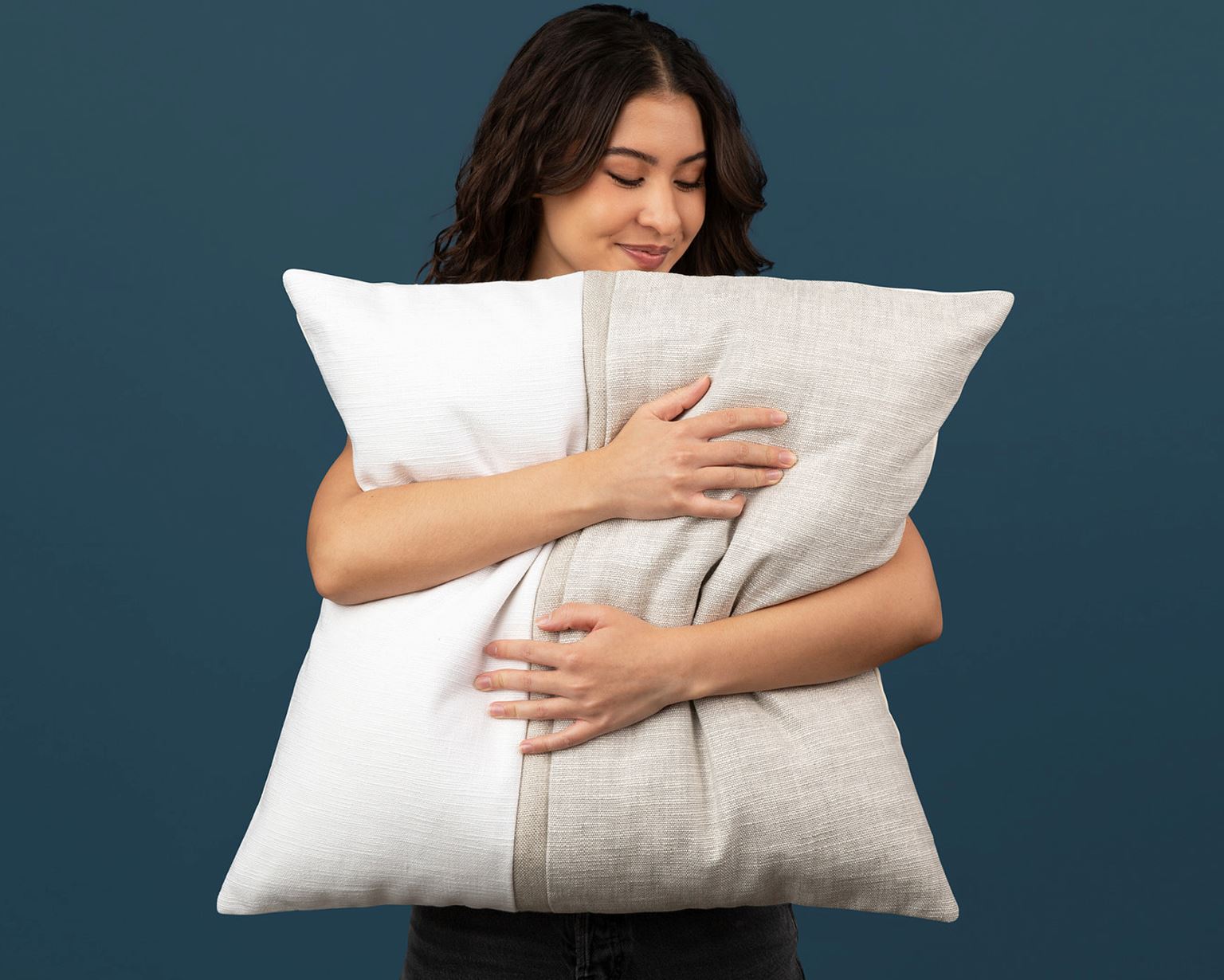
The pillow cover gets the credit. It carries the color, the weave, the name — Montauk, Linstead, Astor. But the piece that decides whether a pillow looks finished or just sloppy is the one nobody photographs: the insert. A good cover on a bad insert looks exactly like a good cover on a bad insert.
It's the least glamorous decision in the whole arrangement, which is why it's usually the one made by default. The cover gets chosen with care. The insert gets whatever you have on hand.
Size Up by Two
Most people match the numbers and call it done — a 20" cover, a 20" insert. It reads as logical, and it's the single most reliable way to end up with a pillow that looks deflated. The fix is one to two inches of overage. A 20" cover wants a 22" insert; an 18" cover takes a 20".
The extra fill is what fills the corners. Match the sizes exactly and the corners empty out first — four soft, drooping points and a cover that creases through the middle. Size up and the cover pulls taut, the corners stay square, and the pillow sits on the sofa instead of sinking into it.
This isn't about cramming. It's about tension. A cover is sewn to a finished dimension, and the insert has to push outward to meet it. Give it slightly more than it asks for and it holds the shape on its own.
The worry is overstuffing. It doesn't happen within the two-inch range. A 22" insert fills out a 20" cover cleanly; a 24" insert in a 20" cover strains the seams and rounds the corners into something closer to a ball. Two inches is the ceiling, not an invitation to keep going.
Choose the Right Fill
There are three options: feather, down, and down alternative. Each has a case for it.
Feather inserts are the most affordable and give you the karate-chop look — the deliberate center dent that signals a styled room. The quills can poke through thinner covers over time, and they require occasional fluffing, but for looks and value they're hard to argue with.
Down is softer and loftier, with less structure than feather. It feels more luxurious in your hands and holds its shape less reliably over time, particularly in long lumbar formats where the fill tends to migrate toward the ends.
Down alternative is hypoallergenic and machine washable, which matters for households with allergies or for covers that need regular cleaning. A dense down alternative insert will outperform a sparse one in any material — weight and fill quality matter more than type.
Pillow Inserts for the Long Lumbar

Square inserts are forgiving. Lumbars aren't, because the proportions leave less room for error and the math is less obvious.
The long lumbar and extra long lumbar are a signature shape for us, and they ask for one thing in particular: support across the full span without sagging in the center. A too-soft or too-short insert turns a long lumbar into a hammock — full at the ends, empty through the middle, which is exactly where the eye settles.
The same size-up logic applies here, but fill quality carries more weight. A long lumbar is mostly an unsupported span, and only real loft keeps it from folding in half. For long shapes, a firmer down alternative or a dense feather insert usually holds its shape better than soft down, which tends to migrate toward the ends over time, leaving the center hollow. It's the one case where shape should outvote feel.
Start With the Insert

If you change one habit about how you buy pillows, change this: stop matching the insert to the cover, and start sizing up. The cover you already own will look better the same afternoon — fuller, squarer, more deliberate — with nothing new in the room except the right pillow inserts underneath it.
Fill is preference, and worth thinking through. Size is simply right or wrong, and it's the part most worth getting right first.
Share:
Lumbar Pillow Sizes, Explained: How to Choose the Right Dimensions for Your Bed or Sofa
Neutral Throw Pillows: Picking Combinations That Don't Go Flat